



Ravenous hunger was what led Jonathan David Muir to strike a deal with another inmate inside the Cuban prison where he is being held: in exchange for two packets of Zuko powdered drink mix, he offered his flip‑flops — black and white, size 42, the size of a 16‑year‑old. He wasn’t giving away something trivial, but the only pair he owned. His father, Pastor Elier Muir, had managed to buy them with difficulty, stretching a budget almost always reserved for food or medicine. “He doesn’t have shoes; thank God those flip‑flops have lasted him this long,” he says. Weeks earlier, Jonathan had worn them to take to the streets of Morón alongside a crowd of angry neighbors after more than two days without electricity. When he was arrested, the criminal investigator noticed his footwear and asked him: “Did you take part in the protest wearing those flip‑flops?”
Neighbors stop Pastor Muir as he walks through Camino de Barro, the area where he lives, just outside Morón in central Cuba. They tell him, “How is Jonathan? Tell him we want him out.” They have sent handwritten letters that the pastor delivers to his son at Canaleta, the maximum‑security prison. Cuba’s latest high‑profile political prisoner is almost beardless, loves video games, is not very expressive, and is “very affectionate.” When he was seven, he was given a small piano that he learned to play by ear during services at the Tiempo de Cosecha church. “Jonathan is the sweet one of the house,” says his mother, Pastor Minerva Burgos. “We have older children, but he’s the youngest — the baby of the family.”
The last few times they have seen him in the prison, he has been wearing a white T‑shirt and gray prison clothes. Another detainee told his parents that Jonathan, gripping the bars of his cell, had been heard saying, “Mom, Dad, please get me out of here.” His mother doesn’t know what to do. “Every time he calls me, he asks over and over, ‘Mom, how long am I going to be here?’ It’s very painful, because I wish I had an answer for my boy, but I don’t.”
On March 13, the residents of Morón had been without electricity for 26 days — a crisis they had already been struggling with, made worse by the fuel blockade imposed on the island by Donald Trump’s administration. With no foreign ships supplying fuel to the country, darkness seeped into every aspect of life: transportation and schools came to a halt, the constant smell of charcoal used for cooking, shortages of everything. That day, the residents decided they would bring back the light themselves, without waiting for anyone. Some grabbed their empty pots and took to the streets in a noisy caravan, shouting slogans and banging metal.
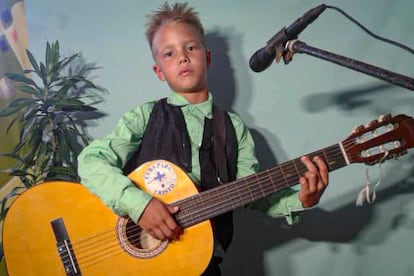
At dusk that Friday, Pastor Muir recounts, the wind blew from east to northeast, toward his humble home. Hurricane Irma had destroyed his old wooden house in 2017, and with great effort, they had managed to build a place with a fiber roof and cement floor that remains their home to this day. Jonathan overheard the disgruntled caravan. His parents begged him to stay home. He was a sick young man; he needed to take care of himself. But Jonathan didn’t want to go to sleep, yet another night, under the mosquito net in the middle of the blackout. He let himself be pulled along by the discomfort and the crowd.
“People were asking for freedom, food, electricity. We never imagined it would go this far,” the father says. “Today he’s in prison not because he wanted to live in luxury, but simply wanting what he needs to survive.”
As night fell on Morón, the protesters marched to the Communist Party headquarters. They stormed inside, threw some furniture out the window, and lit a bonfire in the middle of the street, as if they were setting fire to the very heart of the system. Their discontent was so intense that they gave little thought to the consequences. Five years earlier, the government had imprisoned thousands of people who had taken to the streets to protest across the country.
Authorities cut off internet service and ordered the demonstration to end. A gunshot rang out. Kevin Samuel Echeverría, 15, had been shot in the leg. Days later, addressing the nation, Cuban President Miguel Díaz-Canel said the frustration caused by the prolonged power outages, which he blamed on the U.S. blockade, was understandable. “What will never be understandable,” he added, “is the violence and vandalism that threatens public peace and the security of our institutions.”
In the days following the protest, Cuban police and military forces were searching every corner for demonstrators. They reached the home of the grandparents of one of Jonathan’s friends, beat the elderly couple, forced the door open, and took the young man away in a patrol car. When Muir found out, he hid his son nearby. On March 16, the father received a call. He and Jonathan were being formally summoned to the State Security headquarters in Morón. It was the last time he saw his son free.
The Castro regime vs the Muir-Burgos family
The child came into their lives when the parents were older and had given up hope. In 2006, Burgos was “left to lose a two‑week pregnancy in her womb” because of medical negligence, the father says. The family filed complaints with the hospital but never received any concrete answers. Thus began, in a sense, the couple’s struggle against a system that has condemned them to a life on the margins.
Two years later, during a routine checkup, the doctors informed them that Burgos was six weeks pregnant. “We almost lost our minds,” Pastor Muir recalls. They feared things wouldn’t go as planned. Eventually, the doctors confirmed she was out of danger: “The doctor said, ‘He’s a pioneer, go buy the uniform and the neckerchief, he’s already well-formed and big.’” It was Jonathan, who was born on May 28, 2009. “He was a gift from God, and he still is to this day.”
But Jonathan, his father says, hasn’t had an easy life. When he was born, his religious family was already suffering harassment and persecution from the Cuban authorities. “The government has targeted us because we don’t sympathize with them,” says Muir.
When he was working in ecotourism on Cayo Coco, one of the island’s main tourist destinations, his father was summoned by a State Security agent. “He asked me to cooperate with them, and I told him that my grandfather always told me never to be an informer. That officer got angry, started banging on the desk, pulled out his gun in front of me, and began insulting me. Since then, I’ve never been hired for government jobs. All the persecution is because I’ve always told the truth and I’ve never been afraid of this regime; that’s why they won’t let me prosper or live.”
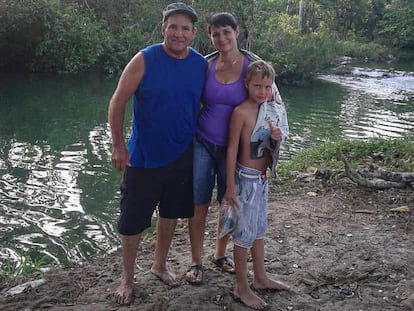
When Jonathan was two years old, his parents got used to leaving church with a small board to protect his head, because some neighbors, acting on orders from the government, would throw stones at them whenever they could. And when he was six, he had a teacher who called him “the little saint.” “She humiliated him for his Christian faith. The boy was depressed, looked down upon, and underestimated.”
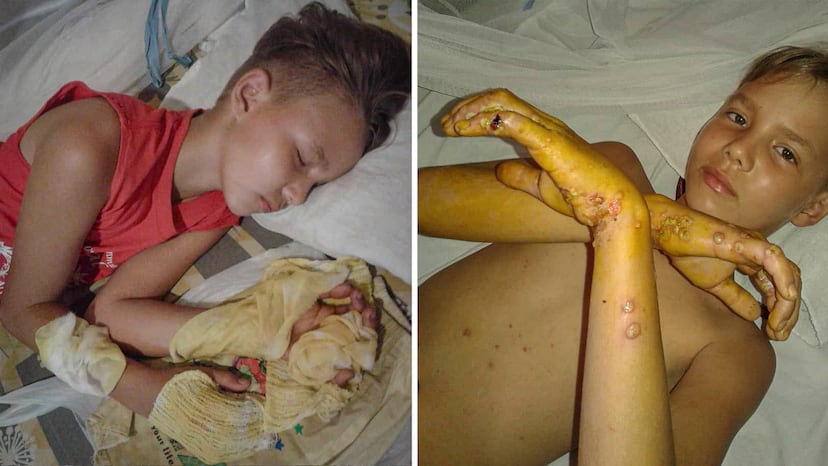
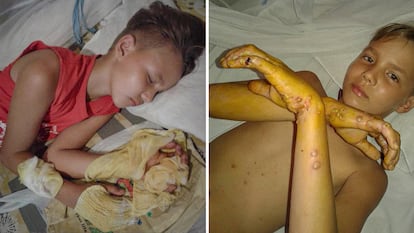
According to his parents, Jonathan developed a trauma. To this day, they have medical records that attest to the fact that the situation caused him to develop dyshidrosis, a skin condition that causes blisters. Because of it, two bacteria settled in his body: a beta‑hemolytic streptococcus and a staphylococcus. “It wasn’t a congenital or contracted disease, but rather an illness caused by all the traumatic events he experienced in his childhood.” The father filed complaints with the Ministry of Education, but nothing was done.
Jonathan was 11 years old when he was first labeled a political provocateur. He was in a classroom of more than 20 children who, in the teacher’s absence, began singing, throwing shoes and chalk, while one of the girls recorded the commotion with her phone. When she showed it to the teacher, Jonathan and three others were questioned by the authorities. “They said it was a political case, that they were disrespecting the nation,” his father recounts. They made them sign a warning document, and Muir was threatened with contempt of court for refusing to comply.
“They see my son as a dissident, as a threat. They are torturing a child, denigrating him, threatening him, because they know that when he grows up, he will be just like his father,” the pastor says.
The Muir-Burgos family’s years of persecution were included in a report released in late 2023 by several United Nations human rights experts and rapporteurs, who documented the harassment, persecution, and death threats they had endured. The following year, the international organization declared the three family members victims of religious persecution by the Cuban state.
“This family’s situation has been incredibly painful,” says Javier Larrondo, director of Prisoners Defenders, an NGO that has been supporting the case. “While Elier Muir has been fighting for his son’s life since childhood, State Security has been persecuting and harassing them with constant threats, even though Elier only does pastoral work and is not involved in politics. The government knows he is not a political sympathizer. Now they have taken his son hostage after seeing him near the demonstrations in Morón, even though his only intention was to observe and remain peaceful.”
Because of everything he experienced at school, Jonathan “was never academically gifted,” his father explains. He wanted to study education, but couldn’t because the school was too far away and he would have had to walk. He completed a course in confectionery and baking, specializing in making chiviricos, a typical Cuban sweet. The day he went out to join the demonstration, he had just finished an order of chiviricos to sell.
A young life being extinguished
If Muir regrets anything, it’s having personally led his son into the hands of the Cuban authorities. On March 16, the officer told him he only wanted to interview Jonathan, but they kept both of them as prisoners. “It’s a sadness I carry in my heart, and I regret it,” he says. “I led him like a meek lamb to the slaughter, without speaking, without complaining, without saying a word.”
Authorities also arrested at least three other teenagers who participated in the same protest, bringing the total number of detainees to approximately 16, according to independent organizations. The arrests occurred while the U.S. government was discussing with Havana the release of more than 1,000 political prisoners on the island.
The father and son were put in a patrol car and taken to the Technical Department of Criminal Investigation in Ciego de Ávila, without the rest of the family knowing anything. That same afternoon, Pastor Muir was released, but his son was taken to Canaleta, the adult prison where he is now accused of sabotage. Lawyer Raudiel Peña Barrios, a member of the Cubalex group, which is keeping records of the case, told EL PAÍS that in Cuba this crime can carry sentences of between seven and 15 years of imprisonment, or even more severe penalties of up to 30 years, life imprisonment, or the death penalty.
“He faces a crime with a very harsh penalty framework, especially for someone so young,” says Barrios. “Since he is under 18, there are special rules for adjusting sentences in the Cuban Penal Code that could benefit him with a reduced sentence, but that is ultimately up to the judges’ discretion.” Recently, the Inter-American Commission on Human Rights (IACHR) granted precautionary measures to the minor after considering “that he is in a situation of gravity and urgency, given that his rights to life, personal integrity, and health are at risk of irreparable harm in Cuba.”
During family visits to the prison, they have witnessed Jonathan’s deteriorating health; he has lost weight and feels weak. “His immune system is weakened, he experiences vasovagal syncope and hypoglycemia, he loses consciousness, and when he regains it, he doesn’t know where he is or if it’s day or night,” says Muir. “What hurts me most when I visit him is going to a place where this child should never be, behind bars, a sick child. This isn’t an isolated incident; they did it to me, and they’re doing it now to my son,” says the father. One question frequently crosses his mind: “Why is my child in a place where his life is in danger, where he could even die?”
Sign up for our weekly newsletter to get more English-language news coverage from EL PAÍS USA Edition
Tomado de https://feeds.elpais.com/



Más historias
Claudiashein : Creemos en las y los jóvenes. Por eso, fortalecemos su educación con la entrega de becas Benito Juárez. Se incorporan 1 millón 800 mil jóvenes que pasaron de secundaria a preparatoria. Hoy entregamos becas en Colima. https://t.co/DOpAd7gzd7
ErnestinaGodoy_ : Porque darle a la ciudadanía un acercamiento humano y cálido cuando se encuentren en búsqueda de justica; es primordial para la @FGRMexico, me siento orgullosa de haber encabezado la Inauguración de los Módulos de Atención Social «MÁS ¡Sí Confío!», desde el estado de Hidalgo. Esta iniciativa es el acompañamiento necesario que se requería para que las personas puedan denunciar, recibir orientación o informarse sobre los procesos de la Fiscalía. También, me llenó de gusto conocer a todas y todos los servidores públicos que formarán parte de este programa en las 32 FIFES del país y notar su compromiso, estoy segura de que harán un gran trabajo. Que todas y todos podamos decir: ¡sí confío!
Claudiashein : Transformación Digital del Sector Salud para beneficio de todas y todos los mexicanos. https://t.co/0jCkoAh50k